Child-Proof and Pet-Proof Your Garage Door
Garage door systems are made up of powerful moving parts designed to lift and lower hundreds of pounds safely. While modern garage doors include important safety features, they are still one of the largest mechanical systems in your home.
For families with young children or pets, that creates real safety hazards if the system is not set up and maintained correctly.
Many homeowners focus on child-proofing kitchens, bathrooms, and stairways but overlook the garage entirely. That is a common mistake. From photo eye sensors near the floor to high-tension garage door spring components, garage doors can pose serious risks when wear and tear, misalignment, or outdated hardware goes unnoticed.
The good news is that with regular maintenance, smart adjustments, and high quality components, it is absolutely possible to make your garage door family safe without sacrificing convenience or performance.
Why Garage Doors Can Be Dangerous for Kids and Pets
Garage doors operate quietly and automatically, which makes them especially unpredictable for children and animals. Kids may see the door as a toy. Pets may not understand whether the door is open or closed until it is too late.
Common safety hazards include:
- Doors closing on small bodies or paws
- Fingers caught between door panels or hinges
- Pets running under a moving door
- Accidental activation from wall buttons or remotes
- Sensor failure or misalignment
- Sudden failure of springs or cables
Because garage door systems rely on tension and momentum, even a brief malfunction can create dangerous situations.
Safety Sensors and Photo Eye Sensors Are Non-Negotiable
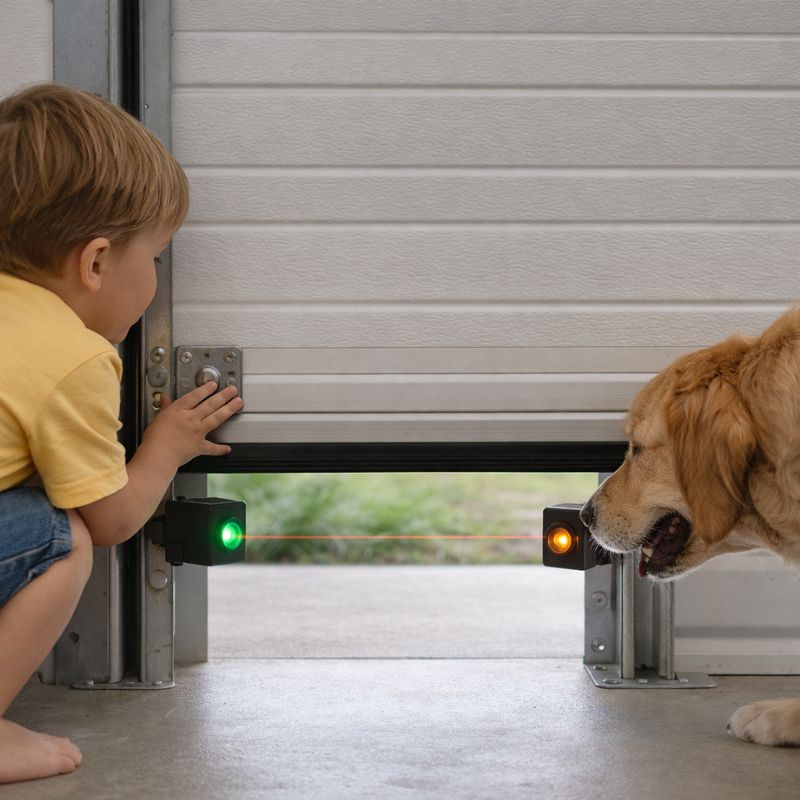
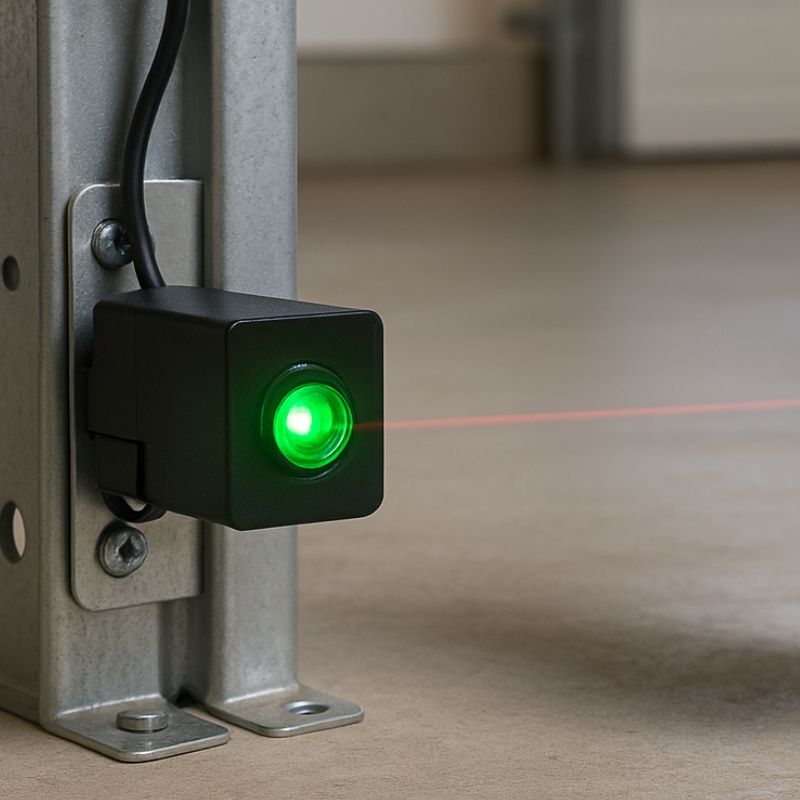
Safety sensors, also known as photo eye sensors, are the most critical child and pet safety feature in modern garage doors. These sensors sit near the floor on both sides of the opening and send an invisible beam across the door path.
If anything breaks that beam, the reverse system should automatically reverse the door before contact occurs.
To keep this system reliable:
- Sensors must be aligned and facing each other
- Indicator lights should remain solid, not blinking
- Wiring must be secure and free from wear and tear
- Sensors should be mounted no higher than six inches off the ground
- The door must automatically reverse every time the beam is interrupted
If your garage door closes fully when the beam is blocked, the system is unsafe and requires immediate attention from a garage door technician.
Keep Garage Door Controls Out of Reach
Wall-mounted buttons and handheld remotes are often overlooked hazards. Children frequently treat them like toys, pressing buttons repeatedly without understanding the consequences.
Best practices include:
- Mounting wall controls at least five feet off the ground
- Using visor clips instead of loose remotes
- Enabling lock features on the opener when available
- Removing unused or spare remotes
- Teaching older children never to play with garage controls
These small steps greatly reduce the risk of accidental door movement.
Protect Fingers From Pinch Points and Panels
Garage doors have multiple pinch points where panels fold and hinges rotate. These areas are especially dangerous for small fingers.
Older doors often lack pinch-resistant panel designs, which means fingers can get caught between sections as the door moves.
Upgrading to a newer door installation with pinch-resistant panels is a good idea for households with children. These designs push fingers away instead of trapping them, significantly reducing injury risk.
Prevent Pets From Running Under a Moving Door
Pets move fast and unpredictably. A dog or cat can dart under a closing door in seconds, especially when excited.
A properly calibrated reverse system ensures the door responds immediately to resistance, not just sensor interruption. This is why preventative maintenance matters.
A safe garage door should:
- Close smoothly without slamming
- Stop and reverse with minimal resistance
- Respond consistently every time
Professional garage door services include force testing to ensure the door reacts correctly if it contacts an object, a child, or a pet.
Secure Exposed Moving Parts and Hardware
Many garage door components are visible and accessible, especially in unfinished garages. Springs, cables, rollers, and brackets may attract curious hands or paws.
A garage door spring stores extreme tension and can cause serious injury if disturbed. Cables support significant weight and should never be touched.
To reduce risk:
- Keep the garage clean and uncluttered
- Block access to tracks and spring assemblies
- Install protective covers where appropriate
- Never allow children to play in the garage unattended
A professional inspection can identify exposed or poorly protected components that should be secured.
Why Door Balance and Smooth Operation Matter
An unbalanced garage door is unpredictable. It may close faster than expected, move unevenly, or strain the opener.
These issues increase safety hazards for children and pets.
Warning signs include:
- The door slams shut
- The opener struggles or hesitates
- The door shakes or jerks
- Increased noise during operation
Balance testing and spring adjustment should only be handled by a trained garage door technician due to the risk involved.
Use Smart Technology for Added Protection
Modern systems allow homeowners to operate garage doors remotely, receive alerts, and check whether the door is open or closed from anywhere.
This is especially helpful for families with children or pets who move between the house and garage throughout the day.
Smart features also provide peace of mind during a power outage by allowing homeowners to verify door status and use manual release systems safely.
Upgrading to a high quality smart opener is often a smart move for busy households.
Perform Simple Monthly Safety Checks
Homeowners can perform basic checks without tools.
Once a month:
- Block the sensor beam and confirm the door reverses
- Place a soft object under the door to test auto-reverse
- Listen for grinding or unusual sounds
- Watch for uneven movement
- Confirm controls remain out of reach
If the door fails any test, stop using it and schedule professional service.
Why Regular and Preventative Maintenance Matters
Regular maintenance is not just about performance. It is about keeping your family safe.
Professional inspections include:
- Garage door spring tension testing
- Safety sensor and photo eye alignment
- Moving parts lubrication
- Reverse system verification
- Hardware tightening
- Structural inspection for long-term wear and tear
Preventative maintenance helps catch problems early, before they become emergencies.
Common Mistakes Homeowners Make
Many garage door injuries happen because safety features are ignored or bypassed.
Common mistakes include:
- Disabling safety sensors after nuisance reversals
- Allowing children to play with remotes
- Ignoring noisy operation
- Attempting DIY spring or cable repairs
- Assuming older systems meet modern safety standards
Garage door systems are engineered for safety, but only when properly maintained and respected.
Final Thoughts: A Safer Garage Is a Smarter Garage
Child-proofing and pet-proofing your garage door system does not require fear or constant supervision. It requires awareness, correct setup, and professional care.
A family safe garage door system:
- Automatically reverses when it should
- Moves smoothly and predictably
- Keeps controls out of reach
- Protects fingers and paws
- Operates reliably year-round
At Third Gen Garage Doors, we provide high quality garage door services throughout Denver, Golden, and the surrounding Front Range. Our experienced technicians help homeowners protect what matters most through expert inspections, preventative maintenance, and safe door installation.
If you have children or pets, scheduling a professional garage door safety inspection is one of the smartest decisions you can make.
Contact Third Gen Garage Doors today to keep your home safe and secure.